

Species Name
Shorttail Whipray
Scientific Name
Maculabatis bineeshi (manjaji-matsumoto & last, 2016)
Family Name
Dasyatidae
IUCN Status
Critically Endangered
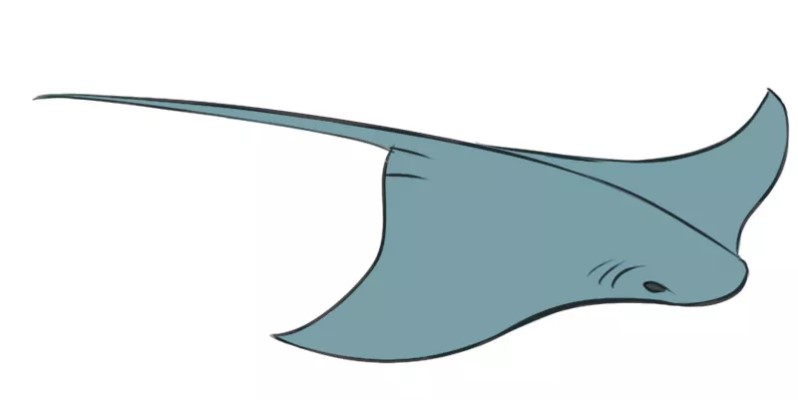
Disc is weakly rhomboidal to suboval, its length 93-98% DW; snout is moderately elongate with weak apical lobe, snout angle 116-121°; pectoral-fin apices are broadly rounded; orbits small to medium-sized, barely protruding; relatively narrow mouth, its width 1.2-1.3 in internasal width; distance between first gill slits is 2.2-2.5 times internasal distance; distance between fifth gill slits is 1.4-1.6 times internasal distance, 28-30% of ventral head length; pelvic-fin base is broad, 14-15% DW; main suprascapular denticle is large, yellowish, broadly ovate, usually followed by smaller subtriangular denticle; secondary denticles developing rapidly, forming a broad band extending from interorbit to tail base by 24 cm DW; dorsal disc uniformly light brown, without white spots; pale ventrally with broad, faint and slightly darker lateral margins; tail dark brown to blackish dorsally and white ventrally forward of caudal sting; plain blackish posteriorly or with weak, irregular pale dorsal banding (in young); pectoral-fin radials 127-131; total vertebral count, 108-114, including synarcual centra, monospondylous centra 44-46, pre-sting diplospondylous centra 64-69.
Biology
Length: It reaches a maximum size of at least 66 cm disc width (DW), size-at-maturity is unknown; males were not mature by 51 cm DW. Size-at birth of ~15–17 cm DW.
Gestation Period: Unknown
Litter Size: Unknown
Life Expectancy: Generation length was inferred as 20 years.
Diet: Unknown
Habitat and distributions
Habitat: The Shorttail Whipray is benthic on muddy substrates in inshore waters from the surface to a depth of 100 m, although usually shallower than 50 m.
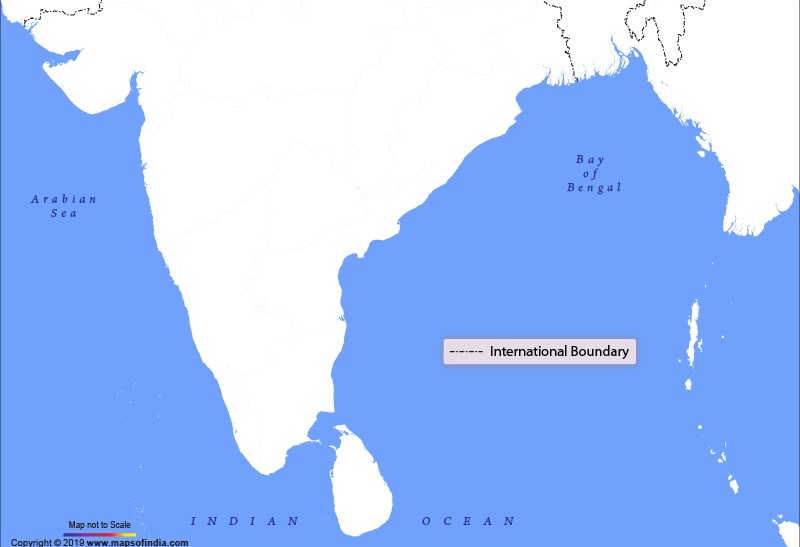
Distribution: The Shorttail Whipray is endemic to the northern Indian Ocean with a patchy distribution in Pakistan, India, northern Sri Lanka, and Bangladesh.
Depth: 0-100 m
Landing sites: Tuticorin, Veraval, Mangrol, Porbander, Okha
Commercial Value
This species is used for its meat which is sold fresh or dried and salted. In Bangladesh, larger rays are desirable for their meat and skin. Ray meat is consumed locally and sometimes exported while the skins from large rays are exported to Myanmar to be made into accessories (e.g. handbags) and sometimes for human consumption. Smaller rays, including juveniles of this species, are retained for their meat, but the skins are too small to be utilized. Small rays are often dried whole for local consumption and export. There has been an increase in the demand of ray meat in coastal and cosmopolitan areas and anecdotal evidence suggests for consumption in some restaurants. In India, there is a specialized market selling only rays in Thalassery, north of Cochin, and the skin of whiprays is often processed and used for leather in India. Ray meat, both fresh and dry salted, is increasing in demand and therefore price in India. In Pakistan, the wings (pectoral fins) of adults are frozen and exported to Thailand and Malaysia, although this is becoming extremely rare for this species. The offal is used in production of fish meal for poultry.
Threats
This species is caught in coastal fisheries by demersal trawl, longlines, gillnets, and demersal set nets. In India, this species is caught in trawls and gillnets at depths of 5–40 m. It is not commonly landed, and only 62 individuals were observed in landings on the east coast market during 2018–2019 (K.K. Bineesh unpubl. data 2020). Juveniles are found in estuaries and high fishing effort, particularly with stake and doll nets, occurs in this habitat. The majority of the geographic distribution of this species in the region overlaps with intense coastal fisheries.
References
CMFRI (2010)
Marine Fisheries Census (2010), Part 1. India, Govt. of India, Ministry of Agriculture, Dept. of Animal Husbandry, Dairying & Fisheries and Central Marine Fisheries Research Institute, Indian Council of Agricultural Research. New Dehli.
Hoq, M.E., Haroon, M.K.Y., Karim, E. (2014) Shark fisheries status and management approach in the Bay of Bengal, Bangladesh. In: Wahab, M.A., Shah, M.S., Hossain, M.A.R., Barman, B.K. and Hoq, M.E. (eds), Advances in Fisheries Research in Bangladesh: I. Proc. of 5th Fisheries Conference & Research Fair 2012. 18-19 January 2012 1 1: 233-246. Dhaka, Bangladesh.
Last, P., White, W., de Carvalho, M., Séret, B., Stehmann, M. and Naylor, G. (2016)
Rays of the World. CSIRO Publishing, Clayton.
Raje, S.G. and Zacharia, P.U. (2009)
Investigations on fishery and biology of nine species of rays in Mumbai waters. Indian Journal of Fisheries 56(2): 95-101.
Varkey, D.A., Ainsworth, C.H., Pitcher, T.J., Goram, Y., and Sumaila, R. (2010)
Illegal, unreported and unregulated fisheries catch in Raja Ampat Regency, Eastern Indonesia. Marine Policy 34: 228–236.
Zeller, D. and Pauly. D. (2016)
Marine fisheries catch reconstruction: definitions, sources, methodology and challenges. In: Pauly, D. and Zeller, D. (eds), Global Atlas of Marine Fisheries: Ecosystem Impacts and Analysis. Washington, D.C.
Related Species
- Jenkins Whipray
- Cowtail Ray
- Coach Whipray
- Scaly Whipray
- Whitespotted Whipray
- Arabian Banded Whipray
- Bengal Whipray
- Bennett's Stingray
- Blackedge Whipray
- Bleeker’s Whipray
- Blotched Fantail Ray
- Bluespotted Lagoon Ray
- Bluespotted Maskray
- Broad Cowtail Ray
- Brown Stingray
- Giant Freshwater Whipray
- Honeycomb Whipray
- Indian Sharpnose Ray
- Kuhl's Maskray
- Leopard Whipray
- Mangrove Whipray
- Narrow Cowtail Ray
- Pakistan Whipray
- Pale-edge Sharpnose Ray
- Pelagic Stingray
- Pink Whipray
- Porcupine Ray
- Roughtail Stingray
- Round Whipray
- Smalleye Stingray