

Species Name
Broad Cowtail Ray
Scientific Name
Pastinachus ater (macleay, 1883)
Family Name
Dasyatidae
IUCN Status
Vulnerable
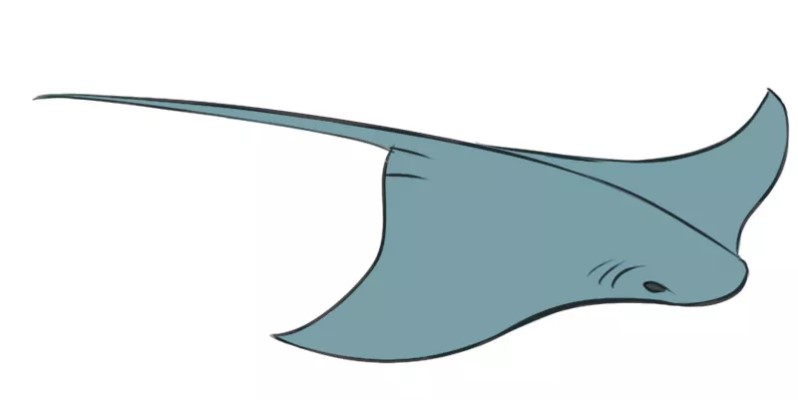
Large cowtail ray with a broad rhomboid disc, and rounded apices; snout broadly rounded, tip blunt; tail long and broad-based, with membranous ventral fin fold, ventral tail fold high (3.5-4.8 times of tail depth behind spine); upper surface uniform, yellowish brown to greyish tail fold and tip black; ventral surface mostly white, with narrow black margins.
Biology
Length: It reaches a maximum size of 200 cm disc width (DW), male and female size-at-maturity is unknown. Size-at-birth is ~18 cm DW
Gestation Period: Unknown
Litter Size: 2 pups
Life Expectancy: Generation length is inferred from a similar species, the Blackspotted Whipray which has a generation length of 20 years. The Blackspotted Whipray is smaller than the Broad Cowtail Ray (80 cm vs 200 cm DW ) and thus as a conservative estimation, the generation length is inferred as 25 years for the Broad Cowtail Ray.
Diet: Feeds on bony fishes, worms, shrimp, and crabs.
Habitat and distribution
Habitat: The Broad Cowtail Stingray occurs in inshore waters, although it prefers shallow waters (including estuarine waters and sometimes into freshwater) and is often located in intertidal lagoons, reef flats, and reef faces.
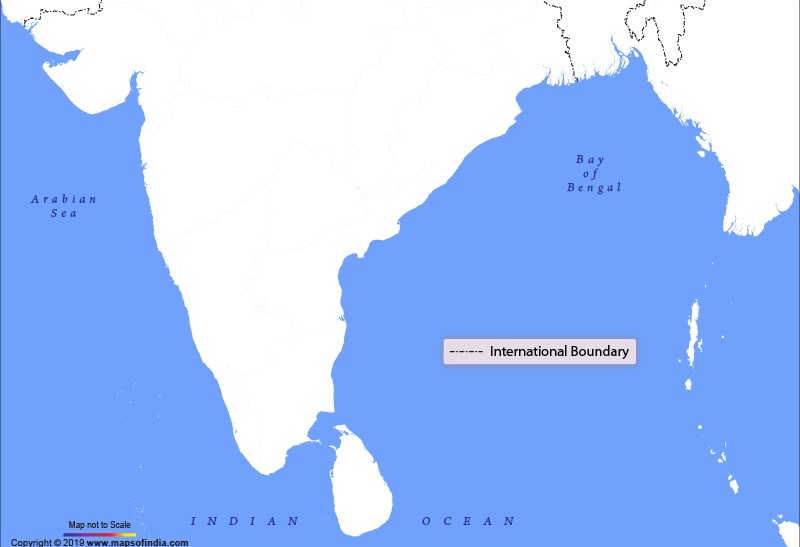
Distribution: The Broad Cowtail Ray is widespread in the Indo-Pacific in the Eastern and Western Indian and Western Central Pacific Oceans from Madagascar to New Caledonia and to the Philippines.
Depth: 0-60 m
Landing sites: Cochin Fisheries Harbour, Junglighat, Mangaluru and Malpe Fisheries Harbours, Okha, Porbandar, Mangrol, Veraval, Diu
Commercial Value
The meat is used for human consumption. Throughout the Southeast Asian portion of their range, the meat is consumed fresh or dried and salted for human consumption. In Papua New Guinea, the meat is sold for local consumption (M.I. Grant pers. comm. 13/10/2020).
In Indonesia and Malaysia, the meat is considered good quality and is consumed locally and traded internationally. This species is occasionally landed at the markets in Singapore and sold to local grocery stores. Larger rays, like this species, are very desirable in Bangladesh for their meat and skin. Ray meat is consumed locally and exported. The skins from large rays are exported to Myanmar to be made into accessories (e.g. handbags). Smaller rays are retained for their meat but the skins are too small to be utilized. Small rays are often dried whole for local consumption and export. There has been some increase in the demand of ray meat in cosmopolitan areas and some anecdotal information suggests in restaurants as well.
In the Gulf of Oman this species is of low value and likely to be discarded. However, it is utilized in Pakistan and India. The meat is usually sold either fresh or dried for human consumption. In Pakistan, the wings (pectoral fins) of adults are frozen and exported to Thailand and Malaysia. In India, there is a specialized market selling only rays in Thalassery, north of Cochin. The skin of large rays is often processed and used for leather in India. In India, ray meat, both fresh and dry salted, is increasing in demand and therefore price.
Threats
Throughout its distribution, the Broad Cowtail Ray is caught in coastal fisheries by demersal trawl, tangle nets, set nets, gill nets, droplines, longlines, and Danish seine. It is taken as retained bycatch in industrial and artisanal fisheries. In Australia, the species is a discarded bycatch in demersal prawn trawl fisheries. The mandatory use of turtle exclusions devices (TEDs) in prawn trawl fisheries operating off northern Australia should limit the catch of this species in these fisheries.
References
Blaber, S., Dichmont, C.M., White, W.T., Buckworth, R.C., Sadiyah, L., Iskandar, B., Nurhakim, S., Pillans, R.D., Andamari, R., Dharmadi and Fahmi. (2009)
Elasmobranchs in southern Indonesian fisheries: the fisheries, the status of the stocks and management options. Reviews in Fish Biology and Fisheries 19: 367–391.
Last, P.R., Naylor, G.J.P. and Manjaji-Matsumoto, B.M. (2016)
A revised classification of the family Dasyatidae (Chondrichthyes: Myliobatiformes) based on new morphological and molecular insights. Zootaxa 4139(3): 345-368. http://doi.org/10.11646/zootaxa.4139.3.2.
Michael, S.W. (1993)
Reef sharks and rays of the world. A guide to their identification, behavior and ecology. Sea Challengers, Monterey, California.
Krakstad, J-O., Michalsen, K., Krafft, B., Bagøien, E., Alvheim, O. and Strømme, T. (2014)
Myanmar Ecosystem Survey: Cruise Report. Institute of Marine Research, Bergen, Norway.
Raje, S.G. and Zacharia, P.U. (2009)
Investigations on fishery and biology of nine species of rays in Mumbai waters. Indian Journal of Fisheries 56(2): 95-101.
Related Species
- Jenkins Whipray
- Cowtail Ray
- Coach Whipray
- Scaly Whipray
- Whitespotted Whipray
- Arabian Banded Whipray
- Bengal Whipray
- Bennett's Stingray
- Blackedge Whipray
- Bleeker’s Whipray
- Blotched Fantail Ray
- Bluespotted Lagoon Ray
- Bluespotted Maskray
- Brown Stingray
- Giant Freshwater Whipray
- Honeycomb Whipray
- Indian Sharpnose Ray
- Kuhl's Maskray
- Leopard Whipray
- Mangrove Whipray
- Narrow Cowtail Ray
- Pakistan Whipray
- Pale-edge Sharpnose Ray
- Pelagic Stingray
- Pink Whipray
- Porcupine Ray
- Roughtail Stingray
- Round Whipray
- Shorttail Whipray
- Smalleye Stingray