

Species Name
Pelagic Stingray
Scientific Name
Pteroplatytrygon violacea (bonaparte, 1832)
Family Name
Dasyatidae
IUCN Status
Least Concern
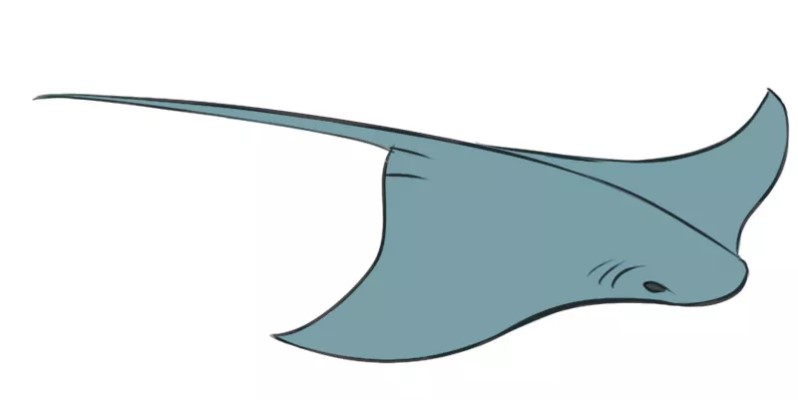
A thick, dark stingray with a broadly rounded snout and an angular pectoral disc; tail less than twice body length with a long lower caudal finfold ending far in front of tail tip, but with no upper finfold; disc without thorns; usually 1 extremely long sting on tail; eyes do not protrude. Uniformly violet, purple, or dark blue-green dorsally and ventrally. No prominent markings.
Biology
Length: It reaches a maximum size of 90 cm disc width (DW); females mature at 39–50 cm DW; and males mature at 35–41 cm DW. Size at birth of 14–24 cm DW.
Gestation Period: 4 months
Litter Size: 2-13
Life Expectancy: Females mature at 3 years; males mature at 2 years; and maximum age is about 10 years; generation length is therefore 6.5 years.
Diet: Feeds on coelenterates (including medusae), squid, decapod crustaceans, and fish.
Habitat and distribution
Habitat: The Pelagic Stingray is perhaps the only species of stingray that occurs in the pelagic zone.
Distribution: The Pelagic Stingray is circumglobal in all tropical and temperate oceans.
Depth: 0-381 m
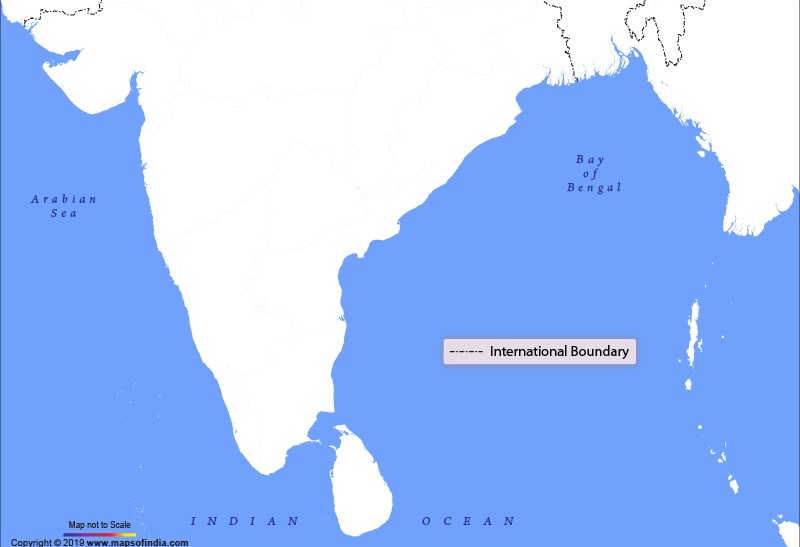
Landing sites: Thoothukudi, Malvan, Veraval, Mangrol, Porbander, Okha, Mangaluru and Malpe Fisheries Harbours
Commercial Value
The Pelagic Stingray is used in some regions of the world, such as Indonesia, for its meat and cartilage.
Threats
The major threat to the Pelagic Stingray are pelagic longline fisheries for tunas, billfishes, and pelagic sharks. This species is caught frequently by tuna and swordfish longliners and to a lesser extent other gear, including pelagic gillnets and trawls. In the Atlantic, between 2008 and 2011, the species was the fifth most commonly captured bycatch species on longline vessels targeting swordfish (Xiphias gladius). It is of low commercial value and mostly discarded, although it is retained and utilized in some areas. In some regions, such as the South Atlantic and Europe, there is a low discard survival rate due to damage to jaws as a result of treatment on-board fishing vessels. Variable catches are reported globally, for example, approximately 2,000 individuals were captured over 5 years to 2005 by the Uruguayan longline fleet in the south Atlantic and 57,500 individuals taken by the Spanish longline fleet in the Mediterranean over 13 years to 2013.
References
Baez, J.C., Crespo, G.O., Garcia-Barcelona, S., Ortiz de Urbina, J. and Macias, D. (2015) Understanding pelagic stingray (Pteroplatytrygon violacea) by-catch by Spanish longliners in the Mediterranean Sea. Journal of the Marine Biological Association of the United Kingdom 98(7): 1387–1394.
Compagno, L.J.V., D.A. Ebert and M.J. Smale, (1989)
Guide to the sharks and rays of southern Africa. New Holland (Publ.) Ltd., London. 158 p.
Coelho, R., Fernandez-Carvalho, J., Lino, P.G. and Santos, M.N. (2012)
An overview of the hooking mortality of elasmobranchs caught in a swordfish pelagic longline fishery in the Atlantic Ocean. Aquatic Living Resources 25(4): 311-319.
Compagno, L.J.V. (1986)
Dasyatidae. p. 135-142. In M.M. Smith and P.C. Heemstra (eds.) Smiths' sea fishes. Springer-Verlag, Berlin
Dulvy, N.K. and J.D. Reynolds (1997)
Evolutionary transitions among egg-laying, live-bearing and maternal inputs in sharks and rays. Proc. R. Soc. Lond., Ser. B: Biol. Sci. 264:1309-1315.
Domingo, A., Menni, R. and Forselledo, R. (2005)
Bycatch of the pelagic ray Dasyatis violacea in Uruguayan longline fisheries and aspects of distribution in the southwestern Atlantic. Scientia Marina 69(1): 161-166.
Forselledo, R., Pons, M., Miller, P. and Domingo, A. (2008)
Distribution and population structure of the pelagic stingray, Pteroplatytrygon violacea (Dasyatidae), in the south-western Atlantic. Aquatic Living Resources 21: 357–363.
Last, P., White, W., de Carvalho, M., Séret, B., Stehmann, M. and Naylor, G. (2016)
Rays of the World. CSIRO Publishing, Clayton.
Neer, J.A. (2008)
Ecology of the pelagic stingray, Pteroplatytrygon violacea (Bonaparte, 1832). In: In: Camhi, M.D., Pikitch, E.K., Babcock, E.A. (eds), (ed.), Sharks of the open ocean: Biology, Fisheries and Conservation., pp. 536p.. Blackwell Scientific,, New York.
Mollet, H.F., Ezcurra, J.M. and O'Sullivan, J.B. (2002)
Captive biology of the pelagic stingray, Dasyatis violacea (Bonaparte, 1832). Marine and Freshwater Research 53: 531-541.
Weigmann, S. (2016)
Annotated checklist of the living sharks, batoids and chimaeras (Chondrichthyes) of the world, with a focus on biogeographical diversity. Journal of Fish Biology 88(3): 837-1037.
White, W.T., Last, P.R., Stevens, J.D., Yearsley, G.K., Fahmi and Dharmadi (2006)
Economically Important Sharks and Rays of Indonesia. Australian Centre for International Agricultural Research, Canberra, Australia.
Related Species
- Jenkins Whipray
- Cowtail Ray
- Coach Whipray
- Scaly Whipray
- Whitespotted Whipray
- Arabian Banded Whipray
- Bengal Whipray
- Bennett's Stingray
- Blackedge Whipray
- Bleeker’s Whipray
- Blotched Fantail Ray
- Bluespotted Lagoon Ray
- Bluespotted Maskray
- Broad Cowtail Ray
- Brown Stingray
- Giant Freshwater Whipray
- Honeycomb Whipray
- Indian Sharpnose Ray
- Kuhl's Maskray
- Leopard Whipray
- Mangrove Whipray
- Narrow Cowtail Ray
- Pakistan Whipray
- Pale-edge Sharpnose Ray
- Pink Whipray
- Porcupine Ray
- Roughtail Stingray
- Round Whipray
- Shorttail Whipray
- Smalleye Stingray