

Species Name
Bengal Whipray
Scientific Name
Brevitrygon imbricata (bloch & schneider, 1801)
Family Name
Dasyatidae
IUCN Status
Vulnerable
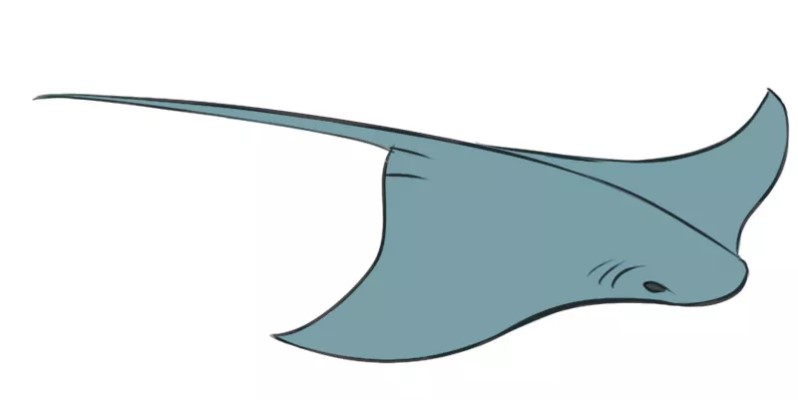
Disc width equal to disc length; tail shorter than body; ventral surface of disc entirely white.
Biology
Length: It reaches a maximum size of 29 cm disc width (DW), males mature at 20–21 cm DW and females mature at ~21 cm DW. Size-at-birth is ~10 cm DW.
Gestation Period: Unknown
Litter Size: Unknown
Life Expectancy: Generation length was inferred as 8.5 years based on age data for the similarly sized Plain Maskray (Neotrygon annotata).
Diet: Young and adults feed on benthic invertebrates.
Habitat and distribution
Habitat: The Bengal Whipray is benthic on the inner continental shelf.
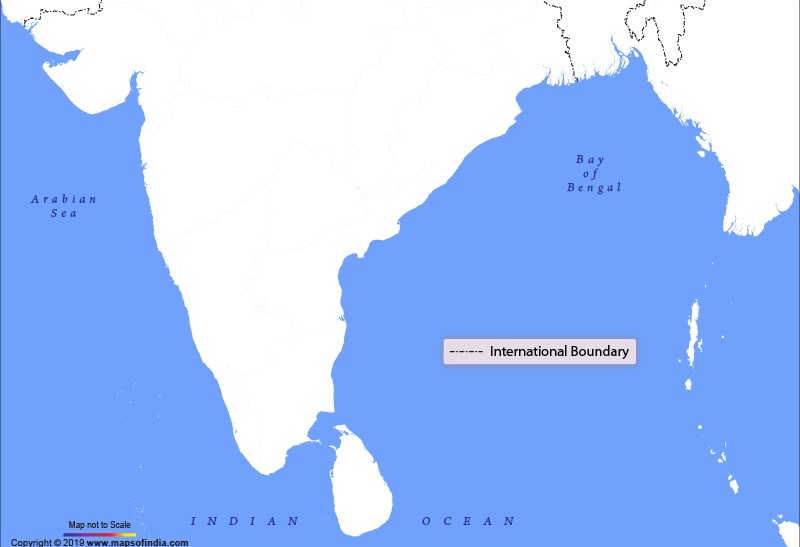
Distribution: The Bengal Whipray occurs in the Eastern Indian and Western Central Pacific Oceans from eastern India to Sarawak, Malaysia.
Depth: 3-55 m
Landing sites: Mumbai (Versova, Sassoon Docks, Satpati, Naigaon, New Ferry Wharf), Malvan, Colachel, Royapuram Fishing Harbour, Cuddalore Fishing Harbour, Nagapattinam Fishing Harbour,Muttom, Cochin Fisheries Harbour
Commercial Value
The flesh of the Bengal Whipray is used fresh for meat. Excess flesh is salted and dried for human consumption and is sometimes exported. In Bangladesh, smaller rays are dried whole and sold in local stores. In India, the skin is often processed and used for leather
Threats
Throughout its distribution, the Bengal Whipray is caught in coastal fisheries by demersal trawl, tangle nets, set nets, gill nets, droplines, longlines, and Danish seine.
References
Hoq, M.E., Haroon, M.K.Y., Karim, E. (2014)
Shark fisheries status and management approach in the Bay of Bengal, Bangladesh. In: Wahab, M.A., Shah, M.S., Hossain, M.A.R., Barman, B.K. and Hoq, M.E. (eds), Advances in Fisheries Research in Bangladesh: I. Proc. of 5th Fisheries Conference & Research Fair 2012. 18-19 January 2012 1 1: 233-246. Dhaka, Bangladesh.
Jacobsen, I.P. and Bennett, M.B. (2010)
Age and growth of Neotrygon picta, Neotrygon annotata and Neotrygon kuhlii from north-east Australia, with notes on their reproductive biology. Journal of Fish Biology 77: 2405-2422.
Kizhakudan, S.J., Mohanraj, G., Batcha, T.H., and Rajapackiam, S. (2010)
Ray fishery by trawlers off Chennai and some aspects of biology of the scaly whipray Himantura imbricata (Bloch & Schneider, 1801). Journal of the Marine Biological Association of India 52(1): 92-95.
Last, P.R., White, W.T., Caira, J.N., Dharmadi, Fahmi, Jensen, K., Lim, A.P.K., Manjaji-Matsumoto, B.M., Naylor, G.J.P., Pogonoski, J.J., Stevens, J.D., Yearsley, G.K. (2010)
Sharks and Rays of Borneo. CSIRO Marine and Atmospheric Research, Collingwood.
Krajangdara, T. (2019)
Sharks and Rays of Thailand. Country Report. Department of Fisheries, Thailand.
Related Species
- Jenkins Whipray
- Cowtail Ray
- Coach Whipray
- Scaly Whipray
- Whitespotted Whipray
- Arabian Banded Whipray
- Bennett's Stingray
- Blackedge Whipray
- Bleeker’s Whipray
- Blotched Fantail Ray
- Bluespotted Lagoon Ray
- Bluespotted Maskray
- Broad Cowtail Ray
- Brown Stingray
- Giant Freshwater Whipray
- Honeycomb Whipray
- Indian Sharpnose Ray
- Kuhl's Maskray
- Leopard Whipray
- Mangrove Whipray
- Narrow Cowtail Ray
- Pakistan Whipray
- Pale-edge Sharpnose Ray
- Pelagic Stingray
- Pink Whipray
- Porcupine Ray
- Roughtail Stingray
- Round Whipray
- Shorttail Whipray
- Smalleye Stingray