

Species Name
Pakistan Whipray
Scientific Name
Maculabatis arabica (manjaji-matsumoto & last, 2016)
Family Name
Dasyatidae
IUCN Status
Critically Endangered
Disc is broadly rhomboidal, its length 89-93% DW; snout is moderately elongate with small apical lobe, snout angle 113-121°; pectoral-fin apices are narrowly rounded; orbits small, protruding slightly; mouth is relatively narrow, its width 1.1-1.6 in internasal width; the distance between first gill slits 2.1-2.3 times internasal distance; distance between fifth gill slits is 1.4-1.5 times internasal distance, 28--30% of ventral head length; pelvic-fin base is narrow, 12-13% DW; a small yellow, seed-shaped suprascapular denticle followed by a slightly larger white, heart-shaped denticle; weak primary denticle band present in young but soon becoming inconspicuous; secondary denticle band is irregularly suboval, relatively narrow with well-defined lateral margins, rounded forward of orbit and not extending lateral to orbit even in large adults; adults with a broad band near tail base; dorsal disc uniformly brownish (lacking white spots); ventral disc pale with broad, weakly-defined and slightly darker margins; anterior tail light-brown on dorsal surface and usually without white lateral spots; tail banded dorsally behind caudal-sting base, bands more obscure or absent with age; pectoral-fin radials 127-135; total vertebral count, including synarcual centra 102-111, monospondylous centra 41-47, pre-sting diplospondylous centra 55-68.
Biology
Length: It attains a maximum size of at least 61 cm disc width (DW) (>200 cm total length).
Gestation Period: Unknown
Litter Size: 1-4 pups
Life Expectancy: Age data are not available but generation length is estimated to be 10 years.
Diet: Unknown
Habitat and distribution
Habitat: The Pakistan Whipray occurs in shallow inshore and shelf waters on muddy bottoms.
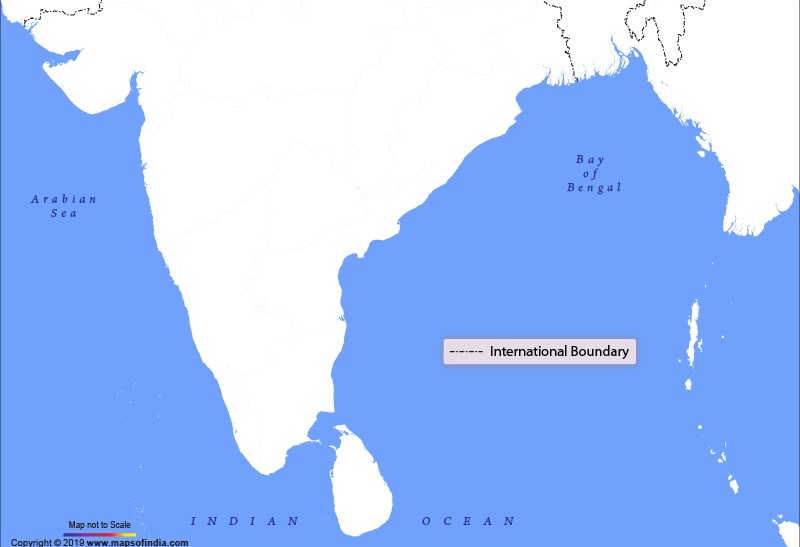
Distribution: The Pakistan Whipray is endemic to the Arabian Seas region, occurring in the Arabian Sea off Pakistan (Sonmiani Bay, Baluchistan and west of Turshian Creek, Sind) and eastward to at least nearby Gujarat, India. A specimen taken near Cochin (India) appears to be this species.
Depth: 0-37 m
Landing sites: Malvan, Mangaluru and Malpe Fisheries Harbours
Commercial Value
This species is taken as incidental catch of inshore trawl fisheries and targeted in bottom-set gill nets, captured for consumption of fresh meat or dried. In Pakistan, the wings (pectoral fins) of adults are frozen and exported to Thailand and Malaysia. They have a relatively high value of $1-3 per kilogram in local markets. In India, there is a specialized market selling only rays in Thalassery, north of Cochin, and the skin of whiprays is often processed and used for leather in India. Ray meat is increasing in demand and therefore prices in India are also increasing.
Threats
This species is taken as incidental catch in inshore trawl fisheries and is targeted using bottom-set gillnets. Juveniles are found in estuaries and much of the fishing effort, particularly with stake nets, occurs in this habitat. Adults are likely to be captured in trawls.
The limited distribution overlaps with intense coastal fisheries throughout the entire geographic range of the species. There are approximately 24,554 trawl vessels operating in the Indian part of the range. The shallow depth distribution means this species is unlikely to have a depth refuge. There has been a significant increase in coastal fishing effort and power over the past 30 years (approximately three generation spans for this species). For example, there were about 6,600 trawlers operating in the Indian state of Gujarat in the early 2000s. This number increased to 11,582 trawlers in 2010. In Pakistan waters, about 2,000 trawlers operate in shelf waters, targeting shrimp in shallow waters and fish in outer shelf waters.
References
CMFRI (2010)
Marine Fisheries Census (2010), Part 1. India, Govt. of India, Ministry of Agriculture, Dept. of Animal Husbandry, Dairying & Fisheries and Central Marine Fisheries Research Institute, Indian Council of Agricultural Research. New Dehli.
IUCN (2017)
The IUCN Red List of Threatened Species. Version 2017-2. Available at: www.iucnredlist.org. (Accessed: 14 September 2017).
Last, P., White, W., de Carvalho, M., Séret, B., Stehmann, M. and Naylor, G. (2016)
Rays of the World. CSIRO Publishing, Clayton.
Manjaji-Matsumoto, B.M. and Last, P.R. (2016) Two new whiprays, Maculabatis arabica sp. nov. and M. bineeshi sp. nov. (Myliobatiformes: Dasyatidae), from the northern Indian Ocean. Zootaxa 4144(3): 335-353.
Pierce, S.J. and Bennett, M.B. (2009)
Validated annual band-pair periodicity and growth parameters of blue-spotted maskray Neotrygon kuhlii from south-east Queensland, Australlia. Journal of Fish Biology 75: 2490 - 2508.
Raje, S.G. and Zacharia, P.U. (2009)
Investigations on fishery and biology of nine species of rays in Mumbai waters. Indian Journal of Fisheries 56(2): 95-101.
Zynudheen, A.A., Ninan, G., Sen, A. and Badonia, R. (2004)
Utilization of trawl bycatch in Gujarat (India). 27 NAGA Worldfish Center Quarterly((3&4)): 20-23.
Related Species
- Jenkins Whipray
- Cowtail Ray
- Coach Whipray
- Scaly Whipray
- Whitespotted Whipray
- Arabian Banded Whipray
- Bengal Whipray
- Bennett's Stingray
- Blackedge Whipray
- Bleeker’s Whipray
- Blotched Fantail Ray
- Bluespotted Lagoon Ray
- Bluespotted Maskray
- Broad Cowtail Ray
- Brown Stingray
- Giant Freshwater Whipray
- Honeycomb Whipray
- Indian Sharpnose Ray
- Kuhl's Maskray
- Leopard Whipray
- Mangrove Whipray
- Narrow Cowtail Ray
- Pale-edge Sharpnose Ray
- Pelagic Stingray
- Pink Whipray
- Porcupine Ray
- Roughtail Stingray
- Round Whipray
- Shorttail Whipray
- Smalleye Stingray