

Species Name
Round Whipray
Scientific Name
Maculabatis pastinacoides (bleeker, 1852)
Family Name
Dasyatidae
IUCN Status
Endangered
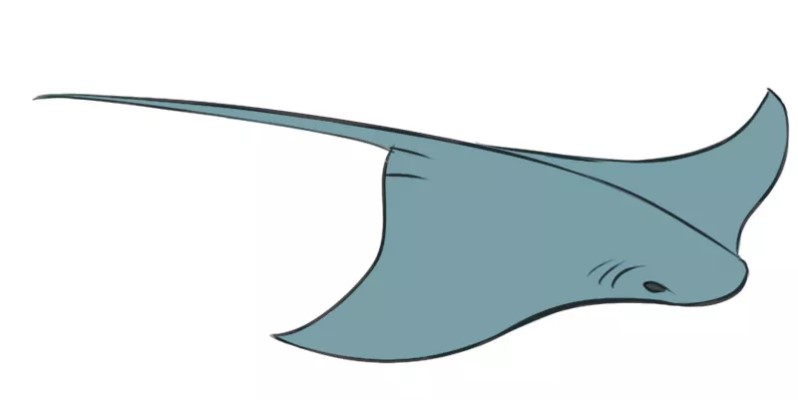
Dorsal surface uniform brownish greyish to greenish; tail blackish beyond sting, not banded. Ventral surface entirely white, with narrow dusky margins. Specimens collected from Pakistan have spots (a bit smaller than eye size) on pelvic fin. It is medium sized, plain coloured stingray with disc as wide as long, rather broad through trunk, raised slightly on shoulders; pectoral fin apex broadly rounded, Snout rather short, broadly triangular apical lobe short; anterior margin weakly convex.
Biology
Length: It reaches a maximum size of 86 cm disc width (DW), males mature between 43–46 cm DW and females mature at 58 cm DW, and size-at-birth is 15–16 cm DW.
Gestation Period: Unknown
Litter Size: 1 pup
Life Expectancy: Generation length was suspected to be 19 years.
Diet: Unknown
Habitat and distribution
Habitat: The Round Whipray is demersal inshore in coastal embayments and estuaries.
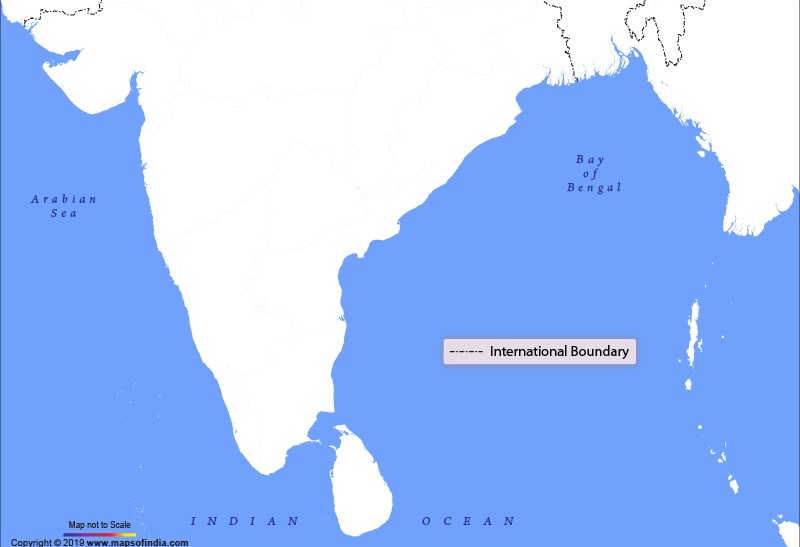
Distribution: The Round Whipray occurs in the Indo-Pacific Ocean from Myanmar to Java, Indonesia. It is possibly extant in Bangladesh and Sri Lanka.
Depth: 0-60 m
Landing sites:
Commercial Value
Round Whipray is frequently landed throughout Southeast Asia and the meat is used fresh or salted and dried for human consumption throughout its range. This species is landed in the markets in Singapore, which come from the waters of Indonesia and Malaysia. Larger rays, like this species, are very desirable in Bangladesh for their meat and skin. Ray meat is consumed locally and exported. The skins from large rays are exported to Myanmar to be made into accessories (e.g. handbags). Smaller rays are retained for their meat, but the skins are too small to be utilized. Small rays are often dried whole for local consumption and export. There has been some increase in the demand for ray meat in cosmopolitan areas and restaurants. Meat is sometimes processed into fishmeal / animal feed when excess is landed.
Threats
Throughout its distribution, the Round Whipray is caught in coastal fisheries by demersal trawl, tangle nets, set nets, gill nets, droplines, longlines, and Danish seine. It is taken as retained bycatch in industrial and artisanal fisheries. In Indonesia, these small-scale fisheries comprise most (~90%) of fisheries production. In some regions, the effort by these small-scale fisheries has tripled when taking population growth into account. Sharks and rays are an important resource in Indonesia and are the main livelihood for some communities. Indonesia catches the highest number of chondrichthyans in the world with the catch of rays rising as shark fisheries collapse. In 2003, rays comprise over 50% of chondrichthyan landings, up from 32% in 1981. Stingrays give the biggest contribution (more than 95%) to elasmobranchs caught by the danish seine (cantrang) which is operated in the Java Sea.
The Round Whipray is not listed as a major catch component of the gill and tangle net fisheries in Indonesian waters, which may indicate a local extinction due to the long history of this fishery and the high catches of other similar-sized whiprays. There is also intensive gillnetting throughout the Malacca Strait and trawl and Danish seines operating throughout Kalimantan and the Java Sea. Thus, the actual level of exploitation of this species could be extremely high throughout the Indonesian portion of its range.
References
Muhammad Moazzam and Hamid Badar Osmany (2021)
Species compostion, commercial landings, distribution and conservation of Stingrays (Class Pisces: Family Dasyatidae) from Pakistan.
Compagno, L.J.V. and Roberts, T.R. (1982) Freshwater stingrays (Dasyatidae) of Southeast Asia and New Guinea, with description of a new species of Himantura and reports of unidentified species. Environmental Biology of Fishes 7(4): 321-339.
D'Alberto, B.M., White, W.T., Chin, A., Dharmadi, and Simpfendorfer, C.A.
Untagling the Indonesian tangle net fishery: describing a data-poor fishery targeting large threatened rays (Order Batoidea). bioRxiv: 608935.
Fahmi, Adrim, M., and Dharmadi (2008)
The contribution of rays in the danish seine fisheries operating at the Java Sea. J. Lit. Perikan. Indo. 14(3): 295–301.
Garman, S. (1913)
The Plagiostomia (sharks, skates and rays). Harvard Univ., Mus. Comp. Zoology.
Manjaji, B.M. (2004)
Taxonomy and phylogenetic systematic of the stingray genus Himantura (Family Dasyatidae). PhD. in Zoology Dissertation, University of Tasmania.
Ramenzoni, V.C. (2017)
Reconstructing the history and effects of mechanization in a small-scale fishery of Flores, Eastern Indonesia (1917–2014). Frontiers in Marine Science 4(65): doi: 10.3389/fmars.2017.00065.
Tull, M. (2014)
The history of fishing in Indonesia. In: Christensen, J. and Tull, M. (eds), Historical Perspectives of Fisheries Exploitation in the Indo-Pacific, Springer, Murdoch.
White, W.T., Last, P.R., Stevens, J.D. and Yearsley, G.K. (2006)
Economically Important Sharks and Rays of Indonesia. Australian Centre for International Agricultural Research, Canberra.
Related Species
- Jenkins Whipray
- Cowtail Ray
- Coach Whipray
- Scaly Whipray
- Whitespotted Whipray
- Arabian Banded Whipray
- Bengal Whipray
- Bennett's Stingray
- Blackedge Whipray
- Bleeker’s Whipray
- Blotched Fantail Ray
- Bluespotted Lagoon Ray
- Bluespotted Maskray
- Broad Cowtail Ray
- Brown Stingray
- Giant Freshwater Whipray
- Honeycomb Whipray
- Indian Sharpnose Ray
- Kuhl's Maskray
- Leopard Whipray
- Mangrove Whipray
- Narrow Cowtail Ray
- Pakistan Whipray
- Pale-edge Sharpnose Ray
- Pelagic Stingray
- Pink Whipray
- Porcupine Ray
- Roughtail Stingray
- Shorttail Whipray
- Smalleye Stingray