

Species Name
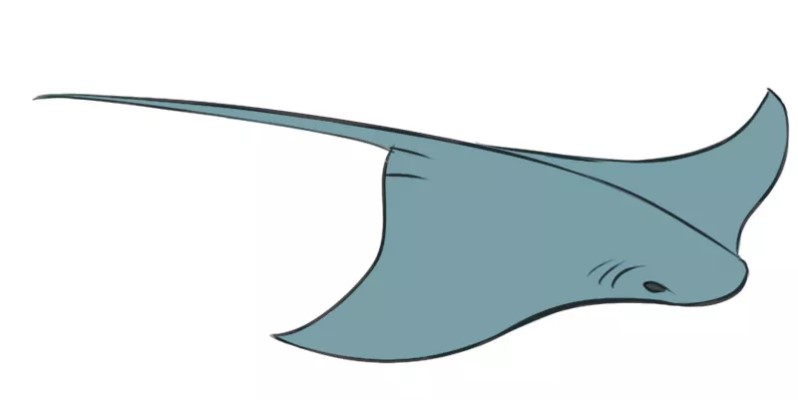
Bleeker’s Whipray
Scientific Name
Pateobatis bleekeri (blyth, 1860)
Family Name
Dasyatidae
IUCN Status
Not Evaluated
Last et al. (2016) described the genus Pateobatis, comprised of five medium-size to very large, marine whiprays previously placed in Himantura (including bleekeri). Previously on The IUCN Red List bleekeri was treated as a junior synonym of uarnacoides. However, Pateobatis bleekeri is considered a valid species by Last et al. (2016). This species was formerly referred to as Himantura alcockii/Himantura uarnacoides in the Arabian Seas region.
Biology
Length: It reaches a maximum size of 119 cm disc width (DW), males and females mature at ~51 cm DW and size-at-birth is ~21 cm DW.
Gestation Period: Unknown
Litter Size: 1-2 pups per litter
Life Expectancy: Generation length of 25 years (Generation length was based on data for Blackspotted Whipray (Maculabatis astra))
Diet: Most likely to feed on small crustaceans. Feeds on bottom-living invertebrates.
Habitat and distribution
Habitat: Enters estuaries. Found mainly on muddy bottoms.
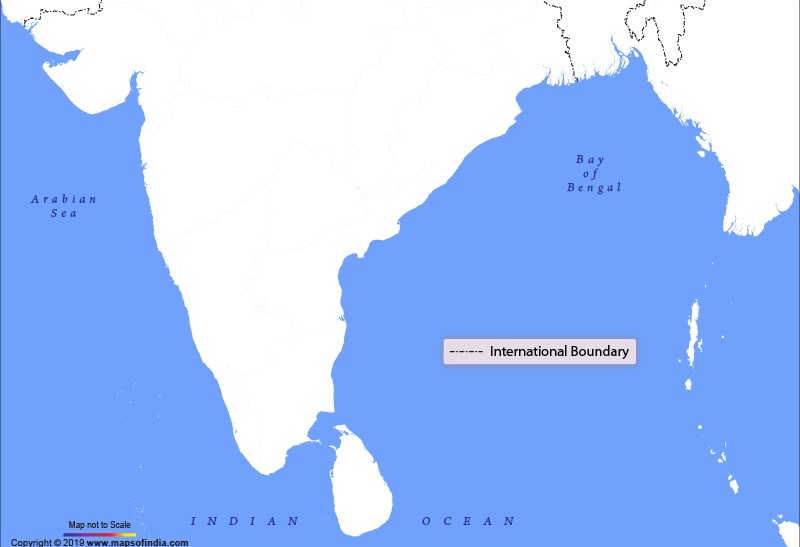
Distribution: Bleeker's Whipray occurs in the Western and Eastern Indian and Western Central Pacific Oceans from Pakistan to Malaysia.
Depth: 0-40 m
Landing sites: Digha Mohana, Royapuram Fishing Harbour, Cuddalore Fishing Harbour, Nagapattinam Fishing Harbour, Mumbai (Versova, Sassoon Docks, Satpati, Naigaon, New Ferry Wharf), Veraval, Mangrol, Porbander, Okha, Thoothukudi
Commercial Value
The meat of Bleeker's Whipray is used fresh or salted and dried for human consumption throughout its range. This species is sometimes landed in the markets in Singapore, where catch from Indonesia and Malaysia is landed. They are infrequently landed in Bangladesh, though desirable due to their size, and the skin is exported to Myanmar. The meat is consumed both locally and exported. Small rays are often dried whole for local consumption and export. There has been some increase in the demand for ray meat in cosmopolitan areas and restaurants. In Pakistan, the wings (pectoral fins) of adults are frozen and exported to Thailand and Malaysia. They have a relatively high value of $1-3 per kg in local markets. In India, there is a specialized market selling only rays in Thalassery, north of Cochin where the meat of the Whitespotted Whipray is preferred. The skin of whiprays is often processed and used for leather in India. Ray meat, both fresh and dry salted, is increasing in demand and therefore price in India.
Threats
Throughout its distribution, Bleeker's Whipray is caught in coastal fisheries by demersal trawl, tangle nets, set nets, gill nets, droplines, longlines, and Danish seine. It is taken as retained bycatch in industrial and artisanal fisheries.
References
Last, P.R., Naylor, G.J.P. and Manjaji-Matsumoto, B.M. (2016)
A revised classification of the family Dasyatidae (Chondrichthyes: Myliobatiformes) based on new morphological and molecular insights. Zootaxa 4139(3): 345-368. http://doi.org/10.11646/zootaxa.4139.3.2.
Raje, S.G. and Zacharia, P.U. (2009)
Investigations on fishery and biology of nine species of rays in Mumbai waters. Indian Journal of Fisheries 56(2): 95-101.
Jacobsen, I.P. and Bennett, M.B. (2011)
Life history of the blackspotted whipray Himantura astra. Journal of Fish Biology 78: 1249-1268.
Krajangdara, T. 2019.
Sharks and Rays of Thailand. Country Report. Department of Fisheries, Thailand.
Talwar, P.K. and A.G. Jhingran, (1991)
Inland fishes of India and adjacent countries. vol 1. A.A. Balkema, Rotterdam. i-liv + 1-541, 1 map
Related Species
- Jenkins Whipray
- Cowtail Ray
- Coach Whipray
- Scaly Whipray
- Whitespotted Whipray
- Arabian Banded Whipray
- Bengal Whipray
- Bennett's Stingray
- Blackedge Whipray
- Blotched Fantail Ray
- Bluespotted Lagoon Ray
- Bluespotted Maskray
- Broad Cowtail Ray
- Brown Stingray
- Giant Freshwater Whipray
- Honeycomb Whipray
- Indian Sharpnose Ray
- Kuhl's Maskray
- Leopard Whipray
- Mangrove Whipray
- Narrow Cowtail Ray
- Pakistan Whipray
- Pale-edge Sharpnose Ray
- Pelagic Stingray
- Pink Whipray
- Porcupine Ray
- Roughtail Stingray
- Round Whipray
- Shorttail Whipray
- Smalleye Stingray