

Species Name
Roughtail Stingray
Scientific Name
Bathytoshia centroura (mitchill, 1815)
Family Name
Dasyatidae
IUCN Status
Vulnerable
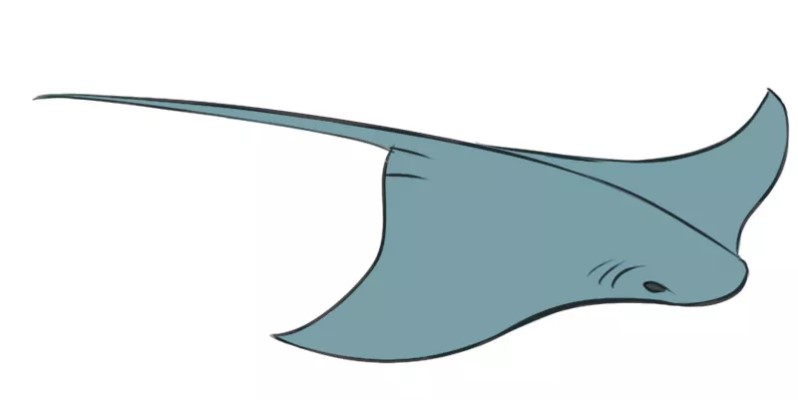
Large specimens of Bathytoshia (Dasyatis) centroura are recognizable by their thorny tails, by the large size and wide spacing spacing of their mid-dorsal bucklers, and by the conspicuous tubercles or bucklers on the outer parts of their discs; in smaller specimens the large tubercles have not yet developed on the tail. It differs from Dasyatis sabina, D. guttata and Himantura schmardae in the shape of disc; it resembles Dasyatis say and D. americana in shape of disc, but it can be distinguished from D. say by the fact that the tail lacks any trace of a cutaneous fold above, and from D. americana by its much narrower ventral tailfold.
Biology
Length: It reaches a maximum size of 220 cm disc width (DW); females mature at 140–160 cm DW, males at 130–150 cm DW. Size-at-birth is 34-37 cm DW
Gestation Period: 4 months
Litter Size: 2-6
Life Expectancy: Generation length is suspected to be about 21.5 years.
Diet: It feeds on bottom-living invertebrates and fishes.
Habitat and distribution
Habitat: The Roughtail Stingray is demersal on soft bottoms.
Distribution: The Roughtail Stingray occurs in the Northwest and Western Central Atlantic from Cape Cod and the Georges Bank, Massachusetts, USA to the Bahamas and the Texas Gulf Coast, and in the Southwest Atlantic from Rio Grande do Norte, Brazil to Golfo San Matías, Chubut, Argentina. A recent record from Tabasco, Mexico extends the range to the southeast Gulf of Mexico.
Depth: 0-275 m
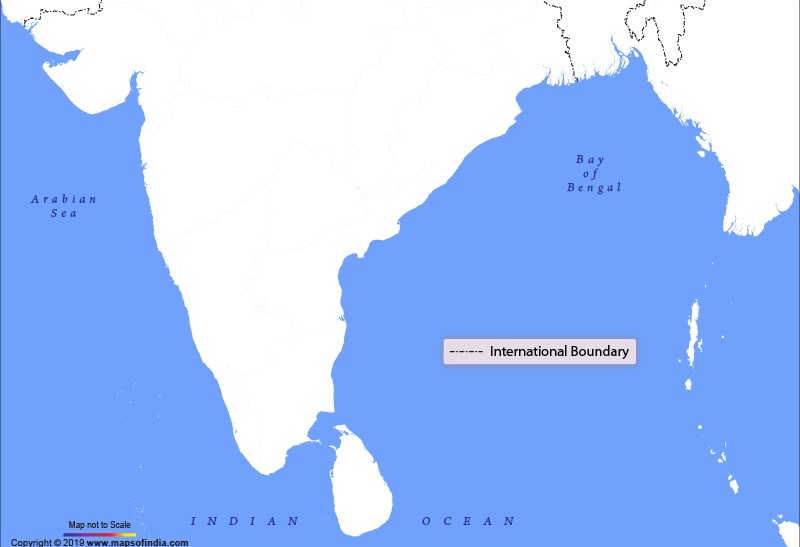
Landing sites: Thoothukudi
Commercial Value
It is likely that the meat of this species is consumed or sold locally where caught in artisanal fisheries.
Threats
The Roughtail Stingray is captured in commercial and artisanal gillnets and trawls, and on recreational hook-and-line fisheries. In the United States, Roughtail Stingray may be caught as bycatch by recreational anglers where it is likely killed due to the danger of its spine. However, the level of mortality is likely low. Roughtail Stingray is caught as bycatch in artisanal shrimp trawl fisheries in southern Mexico but is generally discarded alive. It is also caught in the southeastern Gulf of Mexico in artisanal gillnets. Habitat loss due to tourism and coastal development is an issue in the Quintana Roo region of Mexico.Artisanal fisheries are intense across much of coastal Atlantic South America, and there are largely unmanaged commercial trawl and longline fisheries in many areas. In Eastern Brazil, artisanal fisheries are intense, gillnetting is the predominant artisanal gear, fishers there report that stocks are overexploited, and other elasmobranchs have been depleted. This species is caught by shrimp trawlers off Sergipe State. In southern Brazil, the trawl fishery began in the 1960s and entered a period of rapid expansion in the 1990s and 2000s, resulting in over 650 vessels fishing at depths of 20–1,000 m. Artisanal fisheries there are also intense, and 58% of stocks targeted by artisanal fishers are overexploited, half of those being collapsed. In Uruguay, the industrial trawl fleet was developed in the late 1970s, and many stocks were overexploited by the 1990s. In Argentina, trawl fisheries started to expand in the 1950s and increased rapidly in the mid-1980s. Gillnets are prevalent there and target elasmobranchs.
References
Colautti, D., Baigun, C., Cazorla, A.L., Llompart, F., Molina, J.M., Suquele, P. and Calvo, S. (2010)
Population biology and fishery characteristics of the smooth-hound Mustelus schmitti in Anegada Bay, Argentina. Fisheries Research 106(3): 351–357.
Defeo, O., Puig, P., Horta, S. and Álava, A. de. (2011)
Coastal fisheries of Uruguay. In: Salas, S., Chuenpagdee, R., Charles, A. and Seijo, J.C. (eds), Coastal Fisheries of Latin America and the Caribbean. FAO Fisheries and Aquaculture Technical Paper. No. 544. FAO, Rome, Italy.
Guebert-Bartholo, F.M., Barletta, M., Costa, M.F., Lucena, L.R. and da Silva, C.P. (2011) Fishery and the use of space in a tropical semi-arid estuarine region of Northeast Brazil: subsistence and overexploitation. Journal of Coastal Research Special Issue 64: Proceedings of the 11th International Coastal Symposium ICS2011: 398–402.
Last, P., White, W., de Carvalho, M., Séret, B., Stehmann, M. and Naylor, G. (2016)
Rays of the World. CSIRO Publishing, Clayton.
Vasconcellos, M., Diegues, A.C. and Kalikoski, D.C. (2011)
Coastal Fisheries of Brazil. In: Salas, R. Chuenpagdee, A. Charles and J.C. Seijo (eds), Coastal fisheries of Latin America and the Caribbean, pp. 73-116. FAO, Rome.
Watson, R., Revenga, C. and Kura, Y. (2006) Fishing gear associated with global marine catches II. Trends in trawling and dredging. Fisheries Research 79: 103-111.
Related Species
- Jenkins Whipray
- Cowtail Ray
- Coach Whipray
- Scaly Whipray
- Whitespotted Whipray
- Arabian Banded Whipray
- Bengal Whipray
- Bennett's Stingray
- Blackedge Whipray
- Bleeker’s Whipray
- Blotched Fantail Ray
- Bluespotted Lagoon Ray
- Bluespotted Maskray
- Broad Cowtail Ray
- Brown Stingray
- Giant Freshwater Whipray
- Honeycomb Whipray
- Indian Sharpnose Ray
- Kuhl's Maskray
- Leopard Whipray
- Mangrove Whipray
- Narrow Cowtail Ray
- Pakistan Whipray
- Pale-edge Sharpnose Ray
- Pelagic Stingray
- Pink Whipray
- Porcupine Ray
- Round Whipray
- Shorttail Whipray
- Smalleye Stingray