

Species Name
Brown Stingray
Scientific Name
Bathytoshia lata (garman, 1880)
Family Name
Dasyatidae
IUCN Status
Vulnerable
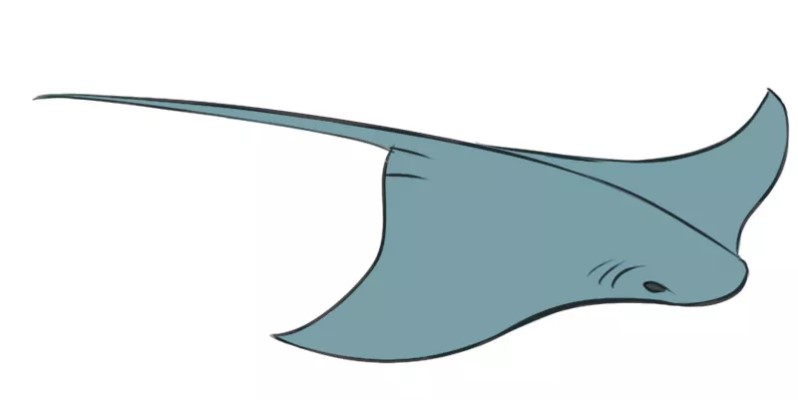
Disc rhomboid, anterior margins more or less straight, posterior margins slightly convex, snout obtuse and produced; nasal curtain broadly skirt shaped, mouth rather broad and depressed, tail with a relatively long membrane below starting at level of spine, no fold or ridge above; dorsal surface with large tubercles or bucklers on snout, around orbits and spiracles; large thorns along top and sides; color olive-brown with reddish areas in the present juvenile specimens.
Biology
Length: It reaches a maximum size of 260 cm disc width (DW), males mature at 80–150 cm DW and females mature at 110–160 cm DW. Size-at-birth of 34–37 cm DW.
Gestation Period: 4 months
Litter Size: 2-6 pups
Life Expectancy: The Brown Stingray has an age-at-maturity of 15 years and a maximum age of 28 years; generation length is therefore 21.5 years.
Diet: Feeds on crabs, prawns and small bony fishes.
Habitat and distribution
Habitat: Demersal or benthic on insular and continental shelves; on on upper slopes. Found on sand or mud bottoms, sometimes near coral reefs.
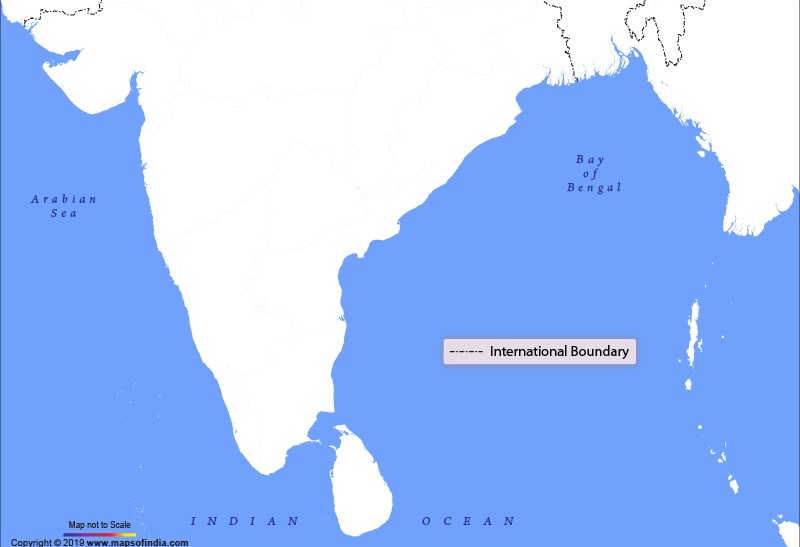
Distribution: The Brown Stingray is found in the Mediterranean Sea (but absent from the Black Sea), east Atlantic Ocean, Indian Ocean, the west Pacific, and Eastern Central Pacific Ocean. It has a widespread but patchy distribution and recent changes to the taxonomy of this species, and its reporting under different names (e.g., Cow Stingray or Black Stingray) may have precluded its accurate identification in the past. Furthermore, many records of this species are old and require verification.
Depth: 0-800 m
Landing sites: Junglighat
Commercial Value
The Brown Stingray is used for its meat. While little-species specific information is available, the meat of rays is consumed fresh in many coastal communities across its range as an important source of protein.
Threats
The Brown Stingray is taken as bycatch in artisanal and industrial fisheries with multiple fishing gears including trawl, gillnet, set nets, tangle nets, and trammel nets, and is retained for human consumption.
References
Okan Akyol, İlker Aydı1, Ali Ulaş, Christian Capapé (2017)
On the capture of a large pregnant Bathytoshia lata (Chondrichthyes: Myliobatiformes: Dasyatidae) from the coast of Çeşme, Izmir (Aegean Sea, Turkey)
Last, P., White, W., de Carvalho, M., Séret, B., Stehmann, M. and Naylor, G. (2016b)
Rays of the World. CSIRO Publishing, Clayton.
Carpenter, K.E. and De Angelis, N. (eds) (2016)
The living marine resources of the Eastern Central Atlantic. Volume 2. Bivalves, gastropods, hagfishes, sharks, batoid fishes, and chimaeras. FAO Species Identification Guide for Fishery Purposes, pp. 665–1509. FAO, Rome.
Dale, J.J. and Holland, K.N. (2012)
Age, growth and maturity of the brown stingray (Dasyatis lata) around Oahu, Hawai'i. Marine and Freshwater Research 63: 475-484.
Walker, T.I. and Gason, A.S. (2007)
Shark and other chondrichthyan byproduct and bycatch estimation in the Southern and Eastern Scalefish and Shark Fishery. Final report to Fisheries and Research Development Corporation Project No. 2001/007. July 2007. vi + 182 pp. Primary Industries Research Victoria, Queenscliff, Victoria, Australia.
Related Species
- Jenkins Whipray
- Cowtail Ray
- Coach Whipray
- Scaly Whipray
- Whitespotted Whipray
- Arabian Banded Whipray
- Bengal Whipray
- Bennett's Stingray
- Blackedge Whipray
- Bleeker’s Whipray
- Blotched Fantail Ray
- Bluespotted Lagoon Ray
- Bluespotted Maskray
- Broad Cowtail Ray
- Giant Freshwater Whipray
- Honeycomb Whipray
- Indian Sharpnose Ray
- Kuhl's Maskray
- Leopard Whipray
- Mangrove Whipray
- Narrow Cowtail Ray
- Pakistan Whipray
- Pale-edge Sharpnose Ray
- Pelagic Stingray
- Pink Whipray
- Porcupine Ray
- Roughtail Stingray
- Round Whipray
- Shorttail Whipray
- Smalleye Stingray