

Species Name
Indian Sharpnose Ray
Scientific Name
Telatrygon crozieri (blyth, 1860)
Family Name
Dasyatidae
IUCN Status
Endangered
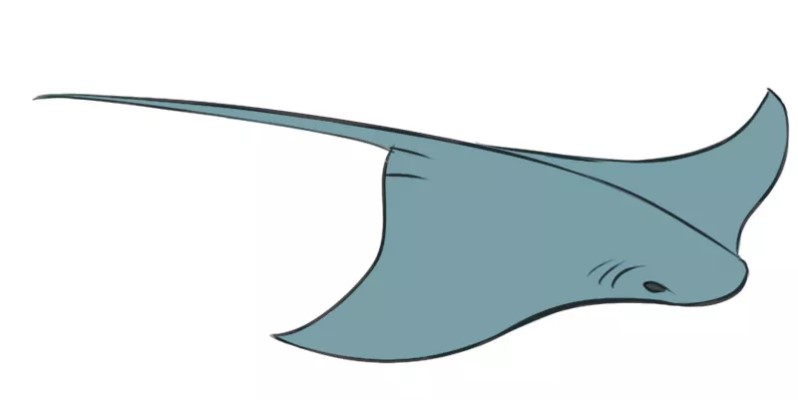
A stingray of the genus Telatrygon from the northern Indian Ocean, originally identified as Trygon zugei has a longer snout and smaller eye than either T. biasa or T. zugei, and a shorter snout and larger eye than T. acutirostra
Biology
Length: It reaches a maximum size of 40 cm disc width (DW) or around 120 cm total length; males mature at 28 cm DW and females mature at 30 cm DW.
Gestation Period: Unknown
Litter Size: 1-4 pups
Life Expectancy: Generation length was inferred as 8.5 years based on data for the similarly sized Plain Maskray (Neotrygon annotata).
Diet: Unknown
Habitat and distribution
Habitat: The Indian Sharpnose Ray is demersal on continental and insular shelves.
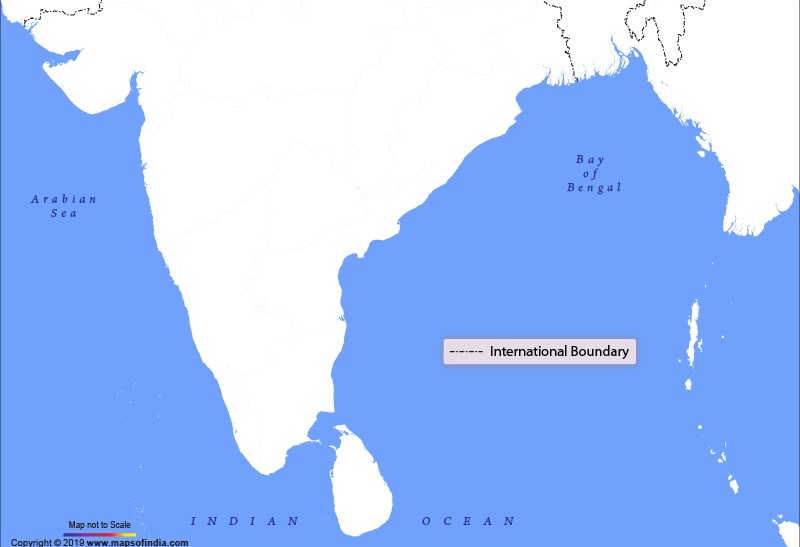
Distribution: The Indian Sharpnose Ray is found in the northern Indian Ocean in India. This species was formerly distributed throughout the coastal waters of India but is now not present in the eastern states of Tamil Nadu and Andra Pradesh, and it is still present in Odisha and West Bengal states. This species may also be present in Pakistan based on photographic records. The presence of T. cf crozieri has been visually confirmed in Bangladesh but awaiting genetic confirmation. This species is not on any local species checklist for Sri Lanka and has not been recorded in recent landings site surveys. This species has not been confirmed from Myanmar.
Depth: 0-50 m
Landing sites:
Commercial value
The flesh of the Indian Sharpnose Ray is used fresh or salted and dried for human consumption throughout its range.
Threats
The Indian Sharpnose Ray is a small species that was regularly caught as bycatch in trawls and gillnets within its range. Rays tend to be subject to target fisheries in Pakistan, Indian and Bangladesh. The limited geographic distribution of this species overlaps with intense coastal fisheries and the shallow depth distribution means this species is unlikely to have a depth refuge.
References
Last, P. R., White, W. T., & Naylor, G. (2016)
Three new stingrays (Myliobatiformes: Dasyatidae) from the Indo–West Pacific. Zootaxa, 4147(4), 377. doi:10.11646/zootaxa.4147.4.2
Bineesh, K.K., Gopalakrishnan, A., Akhilesh, K.V., Sajeela, K.A., Abdussamad, E.M., Pillai, N.G.K., Basheer, V.S., Jena, J.K. and Ward, R.D. (2017)
DNA barcoding reveals species composition of sharks and rays in the Indian commercial fishery. Mitochondrial DNA Part A 28: 458–472.
CMFRI (2010)
Marine Fisheries Census (2010), Part 1. India, Govt. of India, Ministry of Agriculture, Dept. of Animal Husbandry, Dairying & Fisheries and Central Marine Fisheries Research Institute, Indian Council of Agricultural Research. New Dehli.
IUCN (2021)
The IUCN Red List of Threatened Species. Version 2021-2. Available at: www.iucnredlist.org. (Accessed: 04 September 2021).
Jacobsen, I.P. and Bennett, M.B. (2010)
Age and growth of Neotrygon picta, Neotrygon annotata and Neotrygon kuhlii from north-east Australia, with notes on their reproductive biology. Journal of Fish Biology 77: 2405-2422.
Raje, S.G. and Zacharia, P.U. (2009)
Investigations on fishery and biology of nine species of rays in Mumbai waters. Indian Journal of Fisheries 56(2): 95-101.
Tull, M. (2014)
The history of fishing in Indonesia. In: Christensen, J. and Tull, M. (eds), Historical Perspectives of Fisheries Exploitation in the Indo-Pacific, Springer, Murdoch.
Varkey, D.A., Ainsworth, C.H., Pitcher, T.J., Goram, Y., and Sumaila, R. (2010)
Illegal, unreported and unregulated fisheries catch in Raja Ampat Regency, Eastern Indonesia. Marine Policy 34: 228–236.
Related Species
- Jenkins Whipray
- Cowtail Ray
- Coach Whipray
- Scaly Whipray
- Whitespotted Whipray
- Arabian Banded Whipray
- Bengal Whipray
- Bennett's Stingray
- Blackedge Whipray
- Bleeker’s Whipray
- Blotched Fantail Ray
- Bluespotted Lagoon Ray
- Bluespotted Maskray
- Broad Cowtail Ray
- Brown Stingray
- Giant Freshwater Whipray
- Honeycomb Whipray
- Kuhl's Maskray
- Leopard Whipray
- Mangrove Whipray
- Narrow Cowtail Ray
- Pakistan Whipray
- Pale-edge Sharpnose Ray
- Pelagic Stingray
- Pink Whipray
- Porcupine Ray
- Roughtail Stingray
- Round Whipray
- Shorttail Whipray
- Smalleye Stingray