

Species Name
Smalleye Stingray
Scientific Name
Megatrygon microps
Family Name
Dasyatidae
IUCN Status
Data Deficient
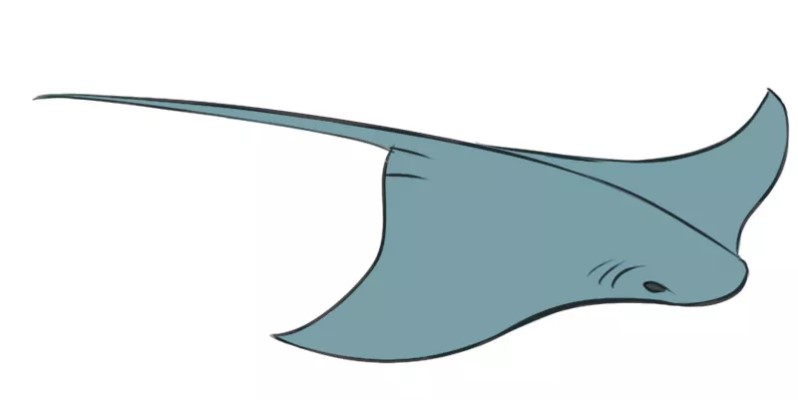
The Smalleye Stingray is a large poorly-known benthopelagic ray that occurs in tropical northern Australia and patchily across the Indo-West Pacific.
Biology
Length: It attains a disc width of up to 222 cm.
Gestation Period: Unknown
Litter Size: 1 pup
Life Expectancy: Unknown
Diet: Unknown
Habitat and distribution
Habitat: Inhabits coastal waters and river mouths. Found on the continental shelf.
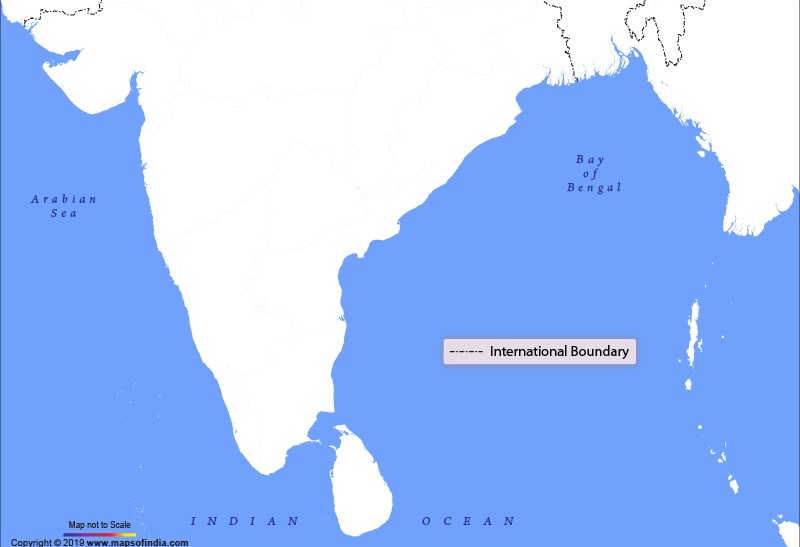
Distribution: The Smalleye Stingray has a patchy distribution in the Indo-West Pacific including Mozambique, India and Bangladesh (including the Ganges River), Maldives, Gulf of Thailand, Malaysia (Sabah and Sarawak), Indonesia and northern Australia. Also likely occurs in other areas in the Indo-West Pacific.
Depth: 0-200 m
Landing sites: Malvan, Cochin Fisheries Harbour, Sassoon Docks
Commercial value
The Smalleye Stingray is utilized for its meat and cartilage in Indonesia and possibly elsewhere.
Threats
The Smalleye Stingray is probably taken as bycatch by bottom longline, trammel net and trawl fisheries throughout its range. In Indonesia, this species is caught occasionally as byproduct in trawl and Danish seine fisheries operating in west (between Natuna and Karimata Islands) and south Kalimantan waters. This stingray was recorded only twice in the Danish seine fishery during studies of catches in August 2005 and May 2007 (two individuals were captured measuring 222 cm disc width and 245 cm total length). One individual was caught by artisanal spear fishers in August 2006 in southern Mozambique. Inshore fishing pressure is intense throughout large areas of this species' geographic range, but it may occur deeper than is currently known, offering refuge from fisheries. Its possible semi-pelagic nature may offer some respite from demersal trawling.
References
Annandale, N. (1908)
A new sting ray of the genus Trygon from the Bay of Bengal. Records of the Indian Museum 2: 393-394.
Garman, S. (1913)
The Plagiostomia (Shark, Skates and Rays). Benthic Press, Los Angeles, California.
Ishihara, H., Taniuchi, T., Tanaka, S. and Srivastava, M.P. (1998)
Investigation of the freshwater elasmobranchs in the River Ganges, p. 41-55. In: Adaptability and conservation of freshwater elasmobranchs. Report of Research Project, Grant-in-Aid for International Scientific Research (Field Research) in the financial year of 1996 and 1997., pp. 119 pp.
Last, P.R. and Stevens, J.D. (2009)
Sharks and Rays of Australia. Second Edition. CSIRO Publishing, Collingwood, Australia.
Last, P.R., Naylor, G.J.P. and Manjaji-Matsumoto, B.M. (2016)
A revised classification of the family Dasyatidae (Chondrichthyes: Myliobatiformes) based on new morphological and molecular insights. Zootaxa 4139(3): 345-368. http://doi.org/10.11646/zootaxa.4139.3.2.
Mohsin, A.K.M. and Ambak, M.A. (1996)
Marine fishes and fisheries of Malaysia and neighbouring countries. University of Pertanian Malaysia Press, Serdang, Malaysia.
Pierce, S.J., White, W.T. and Marshall, A.D. (2008)
New record of the smalleye stingray, Dasyatis microps (Myliobatiformes: Dasyatidae), from the western Indian Ocean. Zootaxa 1734(6): 65-68.
White, W.T., Last, P.R., Stevens, J.D., Yearsley, G.K., Fahmi and Dharmadi. (2006)
Economically Important Sharks and Rays of Indonesia. Australian Centre for International Agricultural Research, Canberra, Australia.
Kapoor, D., R. Dayal and A.G. Ponniah (2002)
Fish biodiversity of India. National Bureau of Fish Genetic Resources Lucknow, India.775 p.
Dulvy, N.K. and J.D. Reynolds (1997)
Evolutionary transitions among egg-laying, live-bearing and maternal inputs in sharks and rays. Proc. R. Soc. Lond., Ser. B: Biol. Sci. 264:1309-1315.
Related Species
- Jenkins Whipray
- Cowtail Ray
- Coach Whipray
- Scaly Whipray
- Whitespotted Whipray
- Arabian Banded Whipray
- Bengal Whipray
- Bennett's Stingray
- Blackedge Whipray
- Bleeker’s Whipray
- Blotched Fantail Ray
- Bluespotted Lagoon Ray
- Bluespotted Maskray
- Broad Cowtail Ray
- Brown Stingray
- Giant Freshwater Whipray
- Honeycomb Whipray
- Indian Sharpnose Ray
- Kuhl's Maskray
- Leopard Whipray
- Mangrove Whipray
- Narrow Cowtail Ray
- Pakistan Whipray
- Pale-edge Sharpnose Ray
- Pelagic Stingray
- Pink Whipray
- Porcupine Ray
- Roughtail Stingray
- Round Whipray
- Shorttail Whipray